
About this campaign
Fairness First asks for one change to one rule, so that fairness is named in the rule that decides how every civil case is run. One amendment, no Act of Parliament, made by a committee that already exists.
The ask
Put fairness first in rule 1.1, the rule that decides how every civil case is run. It tells a court to deal with cases justly and at proportionate cost. Cost was written into that sentence in 2013; fairness was not. Reword it so fairness sits where cost already sits.
Who runs it
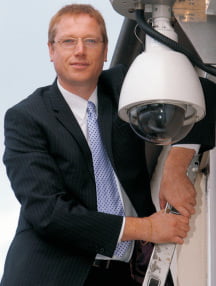 Fairness First is run by Stuart Thompson. He was granted patents in Europe and America for a technology which he recalls the UK Government initially said was impossible. He used them to pioneer one of the world’s first AI-driven markets, now forecast to pass $100 billion by 2035. He has already done once, at scale, what this campaign asks of the civil courts: take the problem everyone says cannot be solved, solve it, and publish the proof. He has fought for his property since 2020. This campaign is not asking for his case to be reopened. It asks for one rule to be reworded.
This is not about my case. It is about the rule that decided how my case was run, and the accident that let me prove it.
My case is nothing in comparison to many that I’ve followed. The only exception is the accident that led to this campaign.
He has done this before
A woman was attacked near his road in Kent. He asked his neighbours whether they wanted a camera. They said no. They did not want to be watched on their own street.
So he asked a different question. Would you accept a camera you controlled, that nobody ever watched? They said yes. That condition became the design.
The industry gave him the reasons it would not work. It took two years to crack and two more to make it. He recalls that the Government first called the idea impossible, and then funded it through its own SMART award. The patents were granted in Europe and America, and a European examiner upheld one of them against a professional challenge.
He has described what he was told at the time as “the millions of reasons why it was a stupid idea”.
Building it was the smaller half. In 2003 he sat down with officers at the Metropolitan Police station in Bexleyheath, backed by the head of the CCTV User Group, and asked the only question that mattered: if I build this, will you use it? He recalls the answer as yes. Nothing was signed. Nothing needed to be. Luton Borough Council then tested the camera against its own manned cameras and put the result on the record.
That is the pattern. Take the thing everyone says cannot be done, do it, and come back with a measurement instead of an opinion.
One rule came out of all of it: measure it, and publish the measurement. This campaign asks the civil courts to name what they are measured against. Cost is already named in the sentence of rule 1.1 that overrides every other. Fairness is not.
Independent, and funded openly
The campaign is not connected to any political party and does not support or oppose any party or candidate. It is not connected with the Civil Procedure Rule Committee. Translations on this site are made automatically and may contain errors. The English text is the one that counts. It is not a charity, because a campaign to change the law cannot be one. How it is paid for, and what gifts will never fund, is set out on the funding page.
Make fairness first Been through the courts? Draft your letters. Two minutes
The case referred to is Santander UK PLC v Stuart Thompson, claim G1PP9250. No judge is named, because the argument is about a rule and not a courtroom, and the proceedings are continuing, so nothing here is intended to influence their outcome. Sources for the story: CCTV Image, Winter 2004 (Tom Reeve), which also carries the written endorsement of the head of the CCTV User Group; Professional Security, January 2006; European Patent EP1579399B1, granted 25 July 2007; United States Patent US7952608B2, granted 31 May 2011; UK Intellectual Property Office Opinion 06/14, 14 May 2014; market forecast: Precedence Research, Video Analytics Market, 18 August 2026. What the Government said, and what its SMART award funded, are Stuart Thompson’s own account, given in the trade press of the time. Nothing on this page is legal advice.