What their own records show
What their own records show Anyone can ask an organisation for the information it holds about them. When this family asked, in two different sectors, the answers showed the same …

What their own records show Anyone can ask an organisation for the information it holds about them. When this family asked, in two different sectors, the answers showed the same …
Why this has to change Nobody has to behave badly for a civil case to go wrong in England and Wales. The rule that decides how every case is run …
Two roads out of the same complaint. The free road can be closed This is what happens when a person complains, and the dispute then reaches a court. On the …
The same closed road, in social care A family complained about a London council’s children’s social care. Every route outside a court closed, in the institutions’ own words. The only …
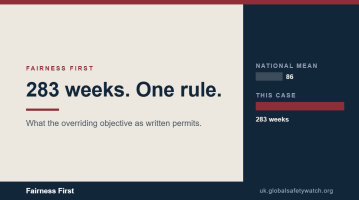
Five and a half years, and what it proves Five and a half years. Twelve hearings listed, ten held. A possession claim against Stuart Thompson over mortgage arrears, met by …
For journalists A campaign to reword one rule of civil procedure so that fairness is named in the overriding objective, where cost already is. One amendment, no Act of Parliament. …
How this campaign is funded We publish who runs this campaign and how it is paid for, before anyone asks. If you can support the work, here is exactly how …
Questions, answered The straight answers to the things people reasonably ask before they act. Why does this need changing at all? Because the rule that decides how every civil case …
The evidence The figures behind the ask. Every one carries its source, and none of it is contested. The money is not the argument for fairness; it is the answer …
Others working on access to justice Fairness First has one narrow ask: to name fairness in one rule. Many organisations work on the wider problem of making the courts usable. …